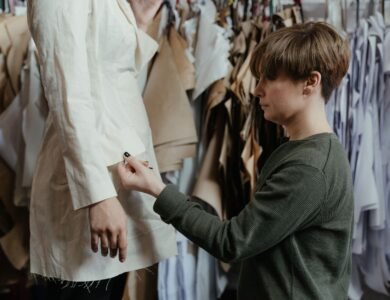
Wearing the same work outfit formula most mornings can make getting ready feel easier because you see fewer choices to weigh. When the rack shows only what fits today’s plan, you skip the mental math and save that energy for work. The benefit comes from how you present the closet in the morning, not from willpower alone.
It works best when visible choices drop from forty to under ten, not when you own less overall but still stare at everything. Cheap pieces that look like a bargain can raise cost per wear when they wear out fast, which is why cost per wear shifts preference toward fewer, longer-lasting pieces. Track what you actually see, time, and wear for a week and the threshold where fewer beats more becomes obvious.
Why mornings feel hard when your closet offers too many choices
A work closet with 40 pieces looks like abundance, but your brain treats it as a calculation task at 7 a.m. Each top could pair with several bottoms and layers, so visible choices quickly climb past what you can compare calmly. That number of visible choices is the driver of extra mental work before you even leave.
The math inflates value. Ten tops times six bottoms suggests 60 outfits, yet most women log approximately six to eight verified wears in a typical week due to fit, laundry lag, weather, and personal preference. The gap between theoretical combos and verified wears creates professional wardrobe decision overload without saving time.
This extra work is called extraneous cognitive load — load created by how options are presented, not by the work task itself. When you limit what you see, you may reduce that load and keep more executive function for meetings and deep work. Choices impair self-control when they stack up, which is why mornings feel draining even though clothes are low stakes.
Try this before you buy: count the work pieces you actually see tomorrow morning before dressing and time how long from closet open to dressed, then log it. That one number reveals your real decision load versus perceived variety, and it becomes your baseline for testing a work outfit formula for busy women.
Interactive calculator: adjust visible choices, whether a formula is pre-decided, and morning time pressure to see estimated extraneous load and time-to-dress
What decision fatigue and cognitive load research says about getting dressed
Decision fatigue describes a limited resource model of self-regulation. Making many choices can deplete the same resource used for self-control and active initiative, which is why a busy morning of choosing can leave less energy for focused work later. Decision making depletes resource even in everyday contexts like shopping, where self-reported active deciding predicted lower self-control afterward.
Cognitive load theory from the late 1980s breaks that drain into three parts. Intrinsic load is the complexity of the work task itself. Extraneous cognitive load defined as load generated by the manner information is presented, and it is under control of instructional designers. Germane load is resources devoted to building useful schemas.
The key idea is additivity. Intrinsic plus extraneous load fills limited working memory. If extraneous load is high because 40 pieces are visible with no clear order, less capacity remains for germane work. Reducing extraneous load by design can help optimize performance for the real work task, not just the closet task.
Choosing among wardrobes is low stakes compared to budgeting or hiring, but it is repeated and cumulative. Pre-decided outfit formulas offload the choosing step, so you deliberate less and preserve executive function. That is different from someone else choosing for you, which is even less depleting, but a self-imposed formula still reduces active decision making.
Diagram showing limited working memory divided into intrinsic work load and extraneous wardrobe load, with more germane capacity when extraneous is low
How choice overload shows up in your closet
Combination math looks generous. Ten tops times six bottoms equals 60 theoretical outfits, but most closets deliver far fewer wearable pairs because of fit gaps, laundry lag, weather, and personal taste. If you track verified wears instead of theoretical math, you often find approximately seven to ten real rotations.
Choice overload research shows a similar pattern. In the classic jam study testing the choice overload hypothesis, shoppers saw 6 versus 24 jams. More options attracted browsing, but jam study purchased less at the large display and reported lower satisfaction. More visible options can increase deferral, the familiar “nothing to wear” pause.
Fast fashion deepens the trap. A low upfront price feels like a win, yet smart spending reframing from the University of Bath shows cost per wear, calculated as price divided by how long the item is likely to last, reframes sustainability as smart spending. Cheap pieces that last approximately 20 wears can have higher cost per wear than a mid-range piece that lasts approximately 100 wears.
In Business Insider India, an art director described spending countless wasted hours each morning wondering what to wear and second-guessing the choice during the workday. As she described it, the routine “saved me countless wasted hours wondering”. She adopted a self-imposed uniform of 15 silk shirts and black trousers to eliminate daily choice, which aligns with the decision-fatigue research above and extraneous load dropping when presentation is standardized, so mental energy shifts to creative work.
Table comparing closet size 40 pieces with theoretical combos vs 7-day verified wears log showing time-to-dress difference
How many work outfits you actually need for a busy week
Laundry cycle sets the real minimum. If you wash work clothes twice a week, you can rotate fewer bottoms because they reset faster. If you wash weekly and have three office days with client meetings, you need more distinct looks without rewearing visibly.
A practical starting point is a 9-piece uniform: 3 bottoms, 4 tops, 2 layers. That yields approximately 24 theoretical combinations, but verified wears settle around 7 to 10 because fit, weather, and meeting load filter options. That filter is useful — it reduces extraneous load while preserving professional variety.
The Bath research adds a spending lens. Preference for high-quality even when pricier increased when shoppers could compare cost per wear side by side, especially for everyday wear versus occasion wear. Fewer, better pieces can lower cost per wear when longevity is factored, even though upfront cost is higher, which matters for affordability.
There is no single best number. Approximately 7 to 10 verified wears often cover a busy week with laundry in between, but climate control and dress code shift it. Check the laundry pile by counting how many bottoms you actually reach for over two weeks — that verified count, not closet total, sets your true needs.
Spectrum bar showing how laundry frequency and variety preference shift the number of pieces you actually need visible
How to build a low-decision work outfit formula that still looks professional
Pick one silhouette and repeat it. For example, straight trouser plus tucked blouse plus blazer, with shoes and bag fixed. Varying texture rather than color keeps continuity, so colleagues see polish, not repetition, while your brain processes the same shape daily.
The mechanism is offloading. A pre-decided formula means choosing is replaced by implementing a choice made earlier. The finding that choosing is more depleting than deliberating is central here, so you preserve self-control for work tasks that need it. This also helps reduce extraneous load by design, because standardizing presentation is under your control.
Use cost per wear to compare pieces for the formula. Cost per wear equals price divided by estimated wears, where estimated wears comes from longevity data via durability tests already done by textile testing services, not guesswork. A $40 top worn approximately 20 times costs approximately $2.00 per wear, while a $120 top worn approximately 100 times costs approximately $1.20 per wear, so the higher upfront can be cheaper over time.
Trade-offs exist. High consistency with a near-identical daily uniform maximizes time saved and executive function preserved, but may feel dull if you love variety. Moderate variety with fixed silhouette plus color swaps keeps satisfaction higher for variety seekers while still cutting visible choices from 40 to under 12, which still reduces load.
Decision flow showing the three steps to build a low-decision outfit formula: pick a silhouette, choose pieces, then test the rotation
Why counting outfit combinations inflates your sense of options
Multiplying tops by bottoms feels rational, but it counts unwearable pairs. It often ignores fit issues, laundry lag, weather mismatch, and preference — a blouse you dislike still counts in math but never in verified wears.
That math is technically correct yet practically misleading, which is why it sounds persuasive in stores. Choice overload research shows more options can increase deferral and lower satisfaction, so a closet that scores high on paper can feel harder in the morning. If you track verified wears for a week, the collapse from theoretical to real becomes visible without any new purchase.
Decision-load wardrobe calculator: time-to-dress log and cost-per-wear check
This calculator is a practical evaluation tool created for this guide based on decision fatigue and cognitive load mechanisms described above, not a published industry standard. Use it to turn abstract load into personal numbers.
Step 1: log 7 days with full closet
Each morning, note visible work choices you see, minutes from closet open to dressed, satisfaction 1 to 5, and whether the outfit was a verified wear. Keep clothes where they normally live so count reflects real presentation.
Step 2: log 7 days with 9-piece uniform
Move 9 pieces to a small rack or front section: 3 bottoms, 4 tops, 2 layers. Hide the rest. Log same metrics. You will typically see time-to-dress drop by approximately 5 to 10 minutes and satisfaction steady or higher because choice is clearer.
Step 3: calculate combination math vs verified wears
Calculate theoretical combos as tops times bottoms times layers. Then count verified wears from your log. Ratio of theoretical to verified shows inflation — for example, 120 theoretical divided by 8 verified equals 15 to 1 inflation, which signals high extraneous load.
Step 4: calculate cost-per-wear and compare
Cost per wear equals price divided by estimated wears, with estimated wears based on material durability and your own history, not wishful thinking. Compare market average cost per wear reference from your closet to uniform candidates. Bath authors note cost per wear could be used like unit pricing in supermarkets to shift preference toward longer-lasting clothing when comparison is easy.
Table showing 7-day log with columns for visible choices, time-to-dress, satisfaction, and cost-per-wear calculation with conditional framing
For travel, the same matrix logic applies. See our guide on how to pack a week of work outfits in a carry-on without needing an iron for how verified wears stretch further than theoretical combos when space is limited. The underlying driver is identical: fewer visible pieces, pre-decided formula, lower extraneous load, more executive function for work, with self-reported decision making predicting lower self-control later if you front-load too many choices.
What this means for your wardrobe
Log your next 7 days with a full closet, then 7 days with a 9-piece uniform of 3 bottoms, 4 tops, and 2 layers, tracking visible choices, minutes to dress, and satisfaction. That time-to-dress log plus cost per wear check referencing the Bath finding shows where fewer, higher-quality pieces beat more combinations. You typically reclaim approximately 40 to 60 minutes each week and shift spending toward lower cost per wear, or you keep facing combination math that inflates options without saving time.
Frequently Asked Questions
Does wearing the same work outfit every day actually reduce decision fatigue according to research?
Research synthesis shows choices impair self-control under a limited-resource model, and wardrobe choices add to cumulative load. Reducing visible choices may reduce extraneous load additive with work tasks, so a same-formula day can feel easier, though it does not guarantee productivity.
How many work outfits do I actually need if I want to wear a uniform without looking like I never do laundry?
Approximately 7 to 10 verified wears often cover a busy week when you wash once or twice. A 9-piece uniform of 3 bottoms, 4 tops, and 2 layers yields approximately 24 theoretical combos but typically 7 to 10 real wears, and comparison increases preference for higher-quality pieces when cost per wear is visible.
Is cost-per-wear labeling really changing how people shop?
The Bath team ran six online experiments published in Psychology & Marketing 2025 and found cost per wear labeling increased preference for longer-lasting clothing, strongest when shoppers could compare values. Authors noted upfront cost remains a barrier, so the effect is strongest for everyday versus occasion wear when comparison is easy.
What if I love variety — will a work uniform make me bored or less creative at work?
It can for some, which is why moderate variety often works better than strict identical dressing. Keep a fixed silhouette but swap texture or color, and track satisfaction 1 to 5 in your log to personalize. Choice overload research suggests satisfaction drops with too many options, but also drops when variety is too low for variety seekers, so aim for approximately 9 to 12 visible pieces if you crave change.